

The Soul of the Steppe
Experience the deep-seated relationship between the steppe nomad and the native Mongolian horse, an ancient breed whose legendary endurance and rugged survival instincts laid the groundwork for historical empires. This specialized program details the daily husbandry, traditional riding mechanics, and spiritual reverence that define one of the last remaining genuine horse cultures on our planet.
Equine Partnerships
The native Mongolian horse is a remarkable creature, surviving unchanged for centuries in a territory where winter temperatures routinely plummet below minus forty degrees. Smaller than Western breeds, these horses possess unparalleled stamina and the unique ability to forage for food beneath deep snow cover. For the steppe nomad, the horse is not treated as a pet or a mere commodity, but as a respected partner in survival. This mutual reliance is the foundation of their nomadic life, dictating migration routes and communal celebrations.
In the context of traditional archery, this partnership becomes even more critical. The archer must rely on the horse’s steady gait and deep familiarity with the terrain, allowing the rider to completely release the reins and focus entirely on drawing the bow. Our curriculum explores the biomechanics of this relationship, teaching students how to communicate subtle commands through weight shifts and leg pressure alone.

Steppe Horsemanship Lineage
The annual Naadam festival showcases the pinnacle of steppe equestrianism through its legendary long-distance horse races. Unlike modern track racing, these events cover up to thirty kilometers of rugged, open terrain, testing the raw endurance of the native horses. The riders, often young children, demonstrate extraordinary balance and lightweight agility. This grueling competition is not just a sport, but a vital cultural ritual that honors the historical speed, spirit, and resilience of the Mongolian horse breed.

The Nomad's Seat
The engineering of the traditional Mongolian wooden saddle features a high cantle and pommel, designed to allow the archer to stand securely in heavy metal stirrups. By rising above the saddle, the rider’s legs act as natural shock absorbers, isolating the upper body from the heavy jolts of a galloping horse. This dynamic standing position provides a remarkably stable shooting platform, allowing the horse archer to maintain a steady line of sight and release arrows with pinpoint accuracy even at high speeds.
Herding on the Steppe
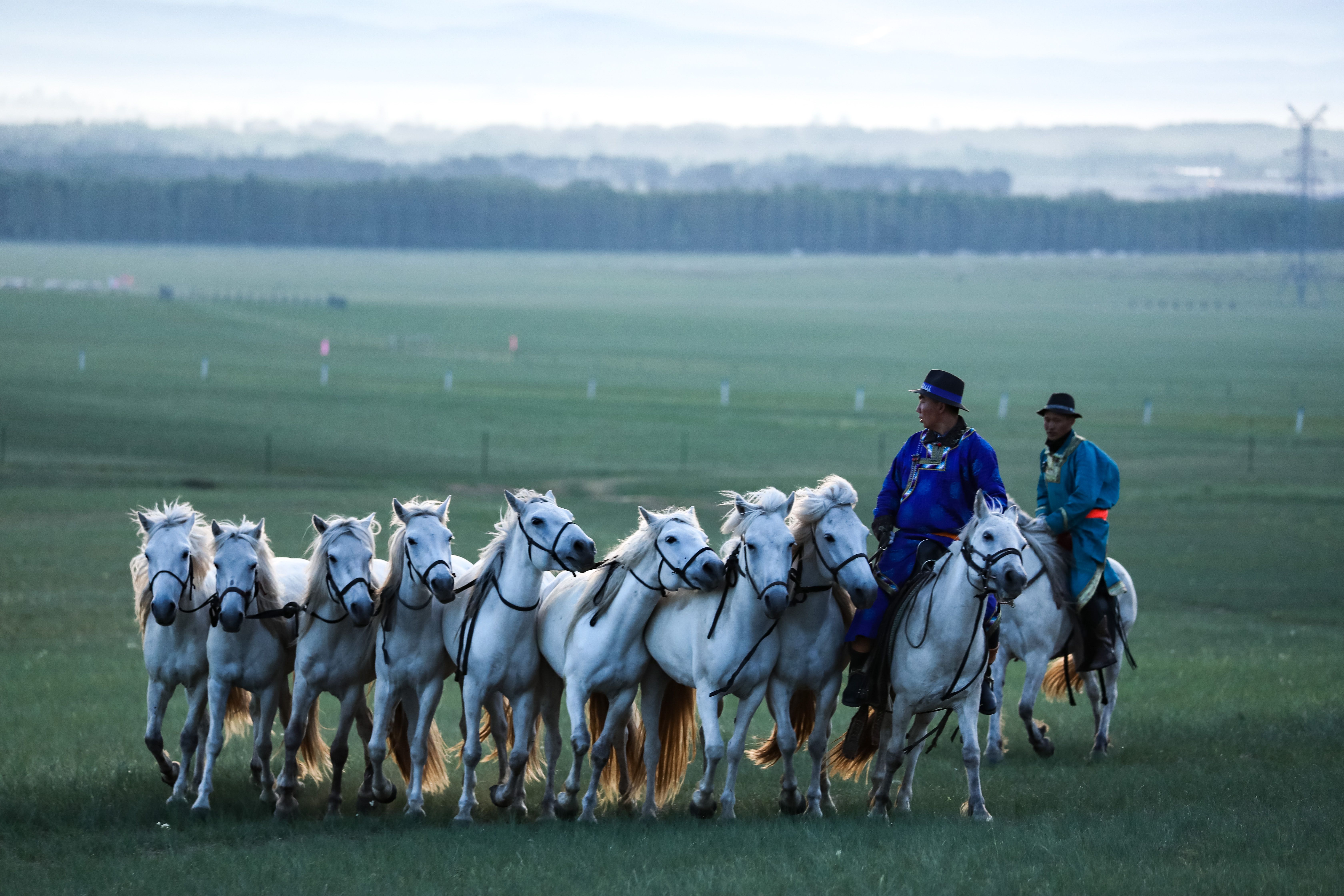
Daily life on the steppe revolves entirely around the needs of the horse herds. They are used for managing sheep and goats, traversing vast distances to locate fresh pastures, and maintaining communication between isolated ger settlements. This constant interaction creates an intuitive connection between herder and mount. From childhood, nomads learn to read equine behavior, resulting in an extraordinary level of riding mastery that makes the horse an organic extension of the rider’s own body and intentions.
“A Mongol without a horse is like a bird without wings, for our history was written from the saddle, and our future remains bound to the hoofbeats that echo across the open grasslands of the steppe.”— Traditional Proverb
Training and Husbandry
Semi-Wild Grazing
By allowing the horse herds to graze freely on the open grasslands without artificial enclosures, they develop vital pack instincts, extreme weather resilience, and an acute ability to detect predators.
Catching with the Uurga
The traditional uurga is a long wooden pole equipped with a durable leather noose at the tip, requiring immense skill and precision to capture semi-wild horses from a galloping mount without causing any injury.
Mares' Milk
Commonly known as airag, this traditional beverage is created by fermenting raw mare's milk through active churning. It is rich in vital nutrients and represents a cornerstone of nomadic hospitality and daily nutrition.
Winter Survival
During the harsh steppe winters, horses survive by using their strong hooves to scrape away deep snow, exposing the dry grass beneath, a unique evolutionary adaptation essential for maintaining year-round herds.
Return to the Expedition
Explore the full depth of steppe heritage. Continue your educational journey by diving deep into the technical mechanics of traditional composite bow construction and the historic chronicles of the great nomadic empires.