Origins of
Mongolian Archery

The Eurasian steppe, a vast, arid, and unforgiving expanse of grasslands stretching from modern-day Hungary to Manchuria, served as the crucible for one of the most formidable martial disciplines in human history. To understand the origins of Mongolian archery, one must look beyond its later applications in imperial conquest. Far from a mere instrument of warfare, the bow was an evolutionary adaptation, inextricably linked to the survival, culture, and daily life of the nomadic pastoralists who inhabited this harsh environment.
01 The Demands of the Steppe
The ecological realities of the steppe dictated a specific way of life. The semi-arid climate rendered large-scale sedentary agriculture largely untenable, necessitating a nomadic pastoralist lifestyle. Survival depended entirely on the husbandry of livestock—primarily sheep, goats, cattle, yaks, and camels.

A Necessary Synthesis
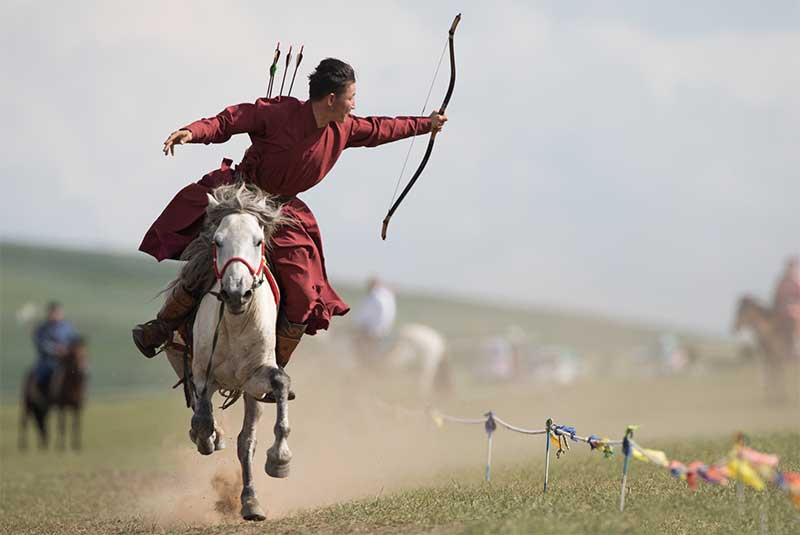
“Within this mobile society, the bow and the horse became an inseparable dyad. The synthesis of equestrian mastery and archery was not initially born of a desire for empire, but of sheer necessity.”
It was a fundamental requirement for hunting game on the open plains to supplement the nomadic diet, as well as for defending vital herds against natural predators and rival nomadic confederations.
02 The Engineering of the Composite Bow
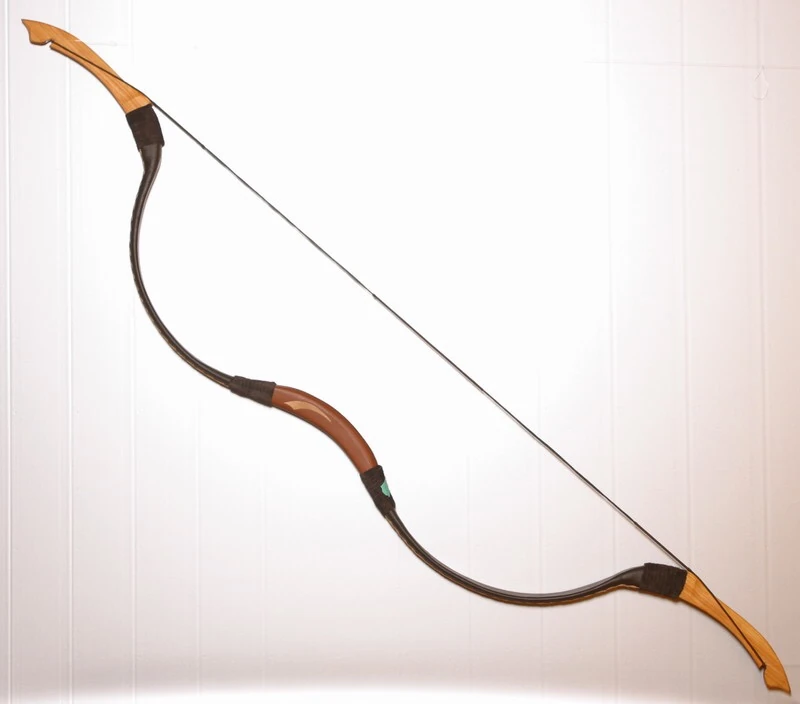
The specific spatial and physical demands of mounted archery precipitated significant technological advancements. Traditional longbows or self-bows, crafted from a single continuous piece of wood, were overly cumbersome to wield from the saddle.
Core Materials
Bamboo or mulberry wood cores provided the essential flexibility and shape required for the compact design.
Tensile Strength
Animal sinew applied to the back allowed the bow to withstand extreme stretching without snapping.
In response to this environmental constraint, early steppe artisans engineered the Asiatic composite bow. Bound together with animal glue derived from fish bladders or hides, the resulting weapon was highly compact, allowing a rider to shift the weapon effortlessly across the horse’s neck.
Conclusion
The Mongolian archery tradition is a profound testament to human adaptability. The world’s greatest horse archers were not created by royal decree, but by the relentless pressures of the Eurasian steppe. The confluence of a nomadic pastoralist economy, early biomechanical innovations in bow-making, and a culture of total immersion from childhood produced a populace wherein every capable adult was a highly trained mounted archer.